We're one of the few homes in our neighborhood without cable or satellite TV. There are several reasons for this state of affairs, including high costs and wanting to avoid the distractions of the Food Channel, Discovery, and Nickelodeon. But we don't see that as a problem. In our area, the broadcast DTV options are great -- five public television channels, four network affiliates, and even a few obscurities like qubo and This TV.
Nevertheless, there are challenges. We have rabbit ears attached to our HDTV, and even though we live right outside of Boston, they often need to fine-tuned to avoid "freezing" and other digital reception problems.
Two weeks ago, though, the big public broadcaster in Boston, WGBH ("Channel 2") disappeared altogether. No amount of fiddling with the antennae or menu settings would solve the problem. I eventually went to the WGBH website to see if there was a FAQ or support page that could help. There wasn't, but the station did respond to an email:
In response to your inquiry, WGBH 2 began mapping to channel 19 (our actual digital frequency) on Thursday, January 14, affecting all of our over-the-air viewers. We believed the problem was resolved by Friday morning, and most viewers who contacted us about the problem confirmed that for us. However, for viewers with certain TV brands, like Samsung, the problem persisted through Wednesday, January 20.
As of Thursday, January 21 at 6:00am, our engineers believe the problem has been resolved. If you now try tuning to WGBH at 2.1 or 2.2 and still do not find us there, please rescan for your channels and then try tuning us in at 2.1 or 2.2.
If you still do not receive us on channel 2, try a double rescan. This involves unplugging your antenna and then scanning for your channels, which should wipe out all channels from your TV's memory. Then plug your antenna back in and perform another scan. This should bring back WGBH 2 to channel 2.
If you can, please let us know how this works for you so we can report back to our engineers. Thanks!
The double rescan fix worked on our TV. However, I wonder how other people who can't reach the right resources on the WGBH.org website or understand their HDTV's confusing UIs (our Samsung remote, for instance, has three buttons that control channel settings) will fare. These days, the learning curve for TV technology is steep. For those people out there who can't figure it out, it will mean lots of frustration or simply giving up on certain over-the-air broadcasters.
(Update: We now own an iPad, and I have a new version of the iPod. See comparison below) I've been using portable computers since the mid-1990s, including laptops, a Windows CE device, and two Palm Pilots (V and a Zire).
But the device that had the biggest impact on my life is actually the smallest of the bunch: a 16 GB iPod touch. I got it in early 2009 for its media functions (music and video playback) but I quickly came to lean on it for email, news, weather, address book, casual games and Web browsing, and many other functions that I never anticipated when I bought it (Twitter client, remote control for my iMac, and a portable Chinese/English dictionary, to name a few).
So, I was very interested in Steve Jobs' iPad demo. One of my first reactions: It looked and behaved like a giant iPod touch. And that's not necessarily a good thing.
Why? The thing that makes the iPod touch so wonderful is its portability. I've been able to get email, address books, Twitter, and other functions on laptops for years, but you can't slip a laptop into your back pocket or whip it out to play a quick game of Bejeweled while you're standing in line at the Post Office. The iPad(see video below) brings a few new optional features, such as iWork, keyboard attachments, and 3G connectivity, but you might as well get a laptop if that's what you need. As for the e-reader features, I am holding off judgment until I try the iPad for reading books and periodicals.
I'm not the only one to make the iPod vs. iPad comparisons -- I noticed the comments right away on Twitter and other places during the demo, and wrote about it for The Standard (see Early iPad reaction: "It's just a giant iPod touch"). I'm curious to try out the iPad for myself once it hits the market in late March, but I think I'll be sticking with my iPod touch.
Update: I bought a 4th-generation iPod touch and received a new iPad for Christmas. The iPad is definitely superior to the iPad for certain functions (such as reading text and using touch-screen functionality for games like Angry Birds) and has been extremely popular, with many tens of millions sold already. But the portability of the iPod touch, along with the camera/video function, makes the iPod a far more practical device. I use it constantly throughout the day, and never have to debate whether to bring it along with me.
Perfect example: Before taking a two-week international trip, I debated whether to bring the iPad, iPod, or a MacBook Pro laptop. The iPad is better for reading books and quality print content and viewing video, but for shooting video and quick snapshots, reading email on the fly, and twitter, the iPod won out. I was also less worried about the iPod getting stolen, as it always fit in my pocket, whereas my friends who brought iPads had to leave them in hotel rooms and luggage from time to time.
Video: 60 Seconds with the iPad
Sources and research: Industry Standard, Engadget, ZDNet, YouTube. The iPod touch photo is from my own Flickr collection licensed under Creative Commons Attribution license. If you want to use it, please credit Ian Lamont and link to ilamont.com .
I was looking through some of our older work at The Standard this afternoon, when I stumbled upon this video that we shot in August 2008, demonstrating Microsoft Surface. It's kind of remarkable that it was just 18 months ago, yet I was so unfamiliar with how touch screens worked. Since then, I've bought an iPod touch and it's become second nature. It's actually reached the point where I expect new mobile devices to have touch screen user interfaces built in, and am surprised when I get no response, such as when I tried out a family member's new Kindle.
I think a lot of other people will be schooled in touch technology in the months to come. But not because of Surface units, which are still rarely seen outside of a few hotels, museums, and tourist information centers. Rather, it's because of the iPhone, iTouch, and soon, the Apple Tablet.
Video: Hands on: Microsoft Surface (Chris Tompkins and Ian Lamont)
By its own account, OK Go owes its success to YouTube. The band says that a viral video at the dawn of the Internet video era (this would be "A Million Ways," or "Here It Goes Again", about four years ago) put it on the map, and since that time, it has seen YouTube as an important part of its marketing strategy.
But there's a little problem now, says OK Go in an open letter: While anyone can view the band's new videos on YouTube, you can't embed them in a blog post, like I did a few days ago with Hug a Pug. This means the viral potential is severely limited, as the video can't be easily shared with fans' own mini-audiences on blogs and fan sites.
Why has OK Go's record label, EMI, hobbled one of its most popular artists by disabling embedding of the band's videos? Because there is no way to monetize the videos, says vocalist Damian Kulash. YouTube runs ads next to and over videos showing on the site, and the videos producers can get a small cut of the ad revenue. On embedded videos, YouTube can also show ads, but respectable (i.e., deep-pocketed) advertisers often don't want to have their ads running in unknown blogs or sites that post the videos.
Kulash says that the issue illustrates the larger problem of a 20th-century industry trying to keep up with the new digital reality (sound familiar?):
What we’re really talking about here is the shift in the way we think about music. We’re stuck between two worlds: the world of ten years ago, where music was privately owned in discreet little chunks (CDs), and a new one that seems to be emerging, where music is universally publicly accessible. The thing is, only one of these worlds has a (somewhat) stable system in place for funding music and all of its associated nuts-and-bolts logistics, and, even if it were possible, none of us would willingly return to that world. Aside from the smug assholes who ran labels, who’d want a system where a handful of corporate overlords shove crap down our throats? All the same, if music is going to be more than a hobby, someone, literally, has to pay the piper. So we’ve got this ridiculous situation where the machinery of the old system is frantically trying to contort and reshape and rewire itself to run without actually selling music. It’s like a car trying to figure out how to run without gas, or a fish trying to learn to breath air.
So what about Hug A Pug, a YouTube video which can be embedded on blogs? Well, as I pointed out in my earlier post, the company that produced the music video (Ganz) is not trying to sell songs. They're trying to sell something else. Songs like Hug A Pug are purely promotions for other products -- namely, Ganz's stuffed animal line (Webkinz), and the virtual world based on the animals (Webkinz World). In other words, Hug A Pug doesn't need to run ads because it is the ad.
There are alternatives for embedding video, including MySpace and Vimeo, and OK Go has made its latest music video available on both services (see video below). But YouTube's huge reach and advertising potential are issues that the music industry are trying to balance, which means that for the time being the song won't be seen that much outside of YouTube.com and a few other sanctioned places.
This is a post about a remarkable pop song that you've probably never heard of, unless you have kids under the age of 10 who are familiar with an online kids-oriented virtual world called Webkinz World. The song is Hug A Pug. It has legions of young fans who know the lyrics and the dance moves, and play it repeatedly at home. I conservatively estimate that it has been played millions of times since it was released last November, without any radio or cable TV exposure or touring. I think the song offers a lesson on how the music industry can approach content partnerships in the years to come.
Hug a Pug (see video below) is a catchy, danceable number that's under two and a half minutes long. It also has an accompanying animation featuring Webkinz characters. I've tried to find the names of the talented artists who wrote and performed it, but to no avail -- the credit and copyright is given to Ganz, the privately held Canadian company which launched the stuffed animals called Webkinz and the accompanying virtual world in 2005. Judging by the fact that the other monthly music videos are by no-name songwriters penning music and lyrics based on the lives of stuffed animals, my guess is Ganz probably shelled out a relatively small amount of money for the unknowns to write and record Hug a Pug and the other songs on spec, in exchange for most or all rights to the music.
There's an animated video of Hug A Pug on YouTube (see below) but you won't find it on any radio playlist, CD store, or iTunes. Most people have heard it when logged onto Webkinz World, where it is a featured song of the month for November 2009. I don't know how many kids are currently registered to use Webkinz World, but 18 months ago it had over 7 million users, according to Oxford Analytica. You can't miss the song, as it's featured prominently on the site. Many young users watch it over and over again -- it's very catchy, and it also has its own dance moves, which encourage lots of practice in front of the computer screen as the video plays. This leads me to believe it's been seen by at least a few million people, and probably played at least five million times.
Another interesting thing about the song is you can't buy it anywhere. It's not for sale. It's a freebie thrown into the Webkinz World mix, which includes lots of online games (copies of Battleship, Connect Four, word games, etc.) as well as a place where kids can dress up the online versions of their real-world stuffed animals and decorate their Webkinz' rooms.
Why spend money to produce a song, if it's not for sale, and eats up lots of IT resources to host and stream? My theory is the song is intended to boost engagement by encouraging return visits to the online world, which is one of only two places it can be played (the other is YouTube). This not only leads to sales of "pets of the month," but also indirectly builds loyalty to the virtual world and additional purchases of the real-world stuffed animals and other merchandise offered by Ganz. Most Webkinz cost between $10 and $20 on Amazon (see ad at right for the current US$ price for the Webkinz pug), but the company has expanded into lower-cost items for existing customers (clothes, charms, etc.) as well as more expensive toys. A Webkinz "Zumbuddy" might cost anywhere from $25 to $40, but lets users unlock a secret part of Webkinz World where there are more activities to play. Getting users more engaged in the world, and not getting bored of old attractions, is the key to keeping them coming back and spending more money. It's a strategy I've seen for many other virtual worlds and MMORPGs, such as World of Warcraft, where new expansion packs and campaigns are released every year or two.
While some people in the music industry may chuckle at Webkinz World and the idea of writing music for 8-year-olds, the fact of the matter is Ganz has a minor hit on its hands (check out some of the hundreds of comments under the YouTube video). Struggling record labels know that getting a hit and connecting with niche audiences is no easy feat. There might even be an opportunity for them to leverage virtual worlds to give their own artists or musicians some extra visibility ("Miley Cyrus sings the Webkinz World June 2010 song of the month!"), work out additional merchandising arrangements in the real/virtual world ("Slash's hat for your pug!"), or take on tasks relating to commissioning appropriate songs and establishing in-world radio stations with other exclusive material that can help virtual world producers keep people online.
There are also some additional opportunities for Ganz and the musicians. Why not sell Hug A Pug or another popular song, "Mustache Louie," on iTunes? Or, sell a disc of monthly hits or B-sides by the same artists? I am sure there are a lot of 9-year-olds -- and even some of their parents -- who want to hear these songs on their iPods.
Watch the video below, or leave comments in the field at the bottom of the post. If you know the artist who wrote and performed "Hug a Pug," let us know!
Video: Hug a pug
Sources and research: Ganz corporate website, Webkinz World, YouTube, CNet, Oxford Analytica


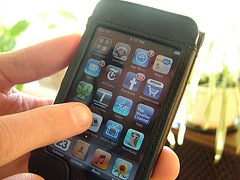
 . I got it in early 2009 for its media functions (music and video playback) but I quickly came to lean on it for email, news, weather, address book, casual games and Web browsing, and many other functions that I never anticipated when I bought it (Twitter client, remote control for my iMac, and a portable Chinese/English dictionary, to name a few).
