The old Newton North High School building is soon going to be demolished (as long as they can figure out how to handle the asbestos problem). I attended NNHS in the mid-1980s, but came back during the last week it was open in June 2010 to meet up with some friends and see the final Ric & Rocco review. The building never was nice to look at, but it was our world -- an important place for learning and making connections from 1973 to 2010, for tens of thousands of youths. (Journalist Seth Mnookin describes what NNHS was like when he was there from 1986 to the early 1990s.)
I shot this video of the Lowell Ave. approach and Main Street, from the library steps to Little Theatre to Barry House. It might be the last video that was ever shot of the interior before the hard-hats moved in. Enjoy, and feel free to share your memories of the old NNHS int the comments section below.
Saturday, November 27, 2010


Sunday, November 14, 2010
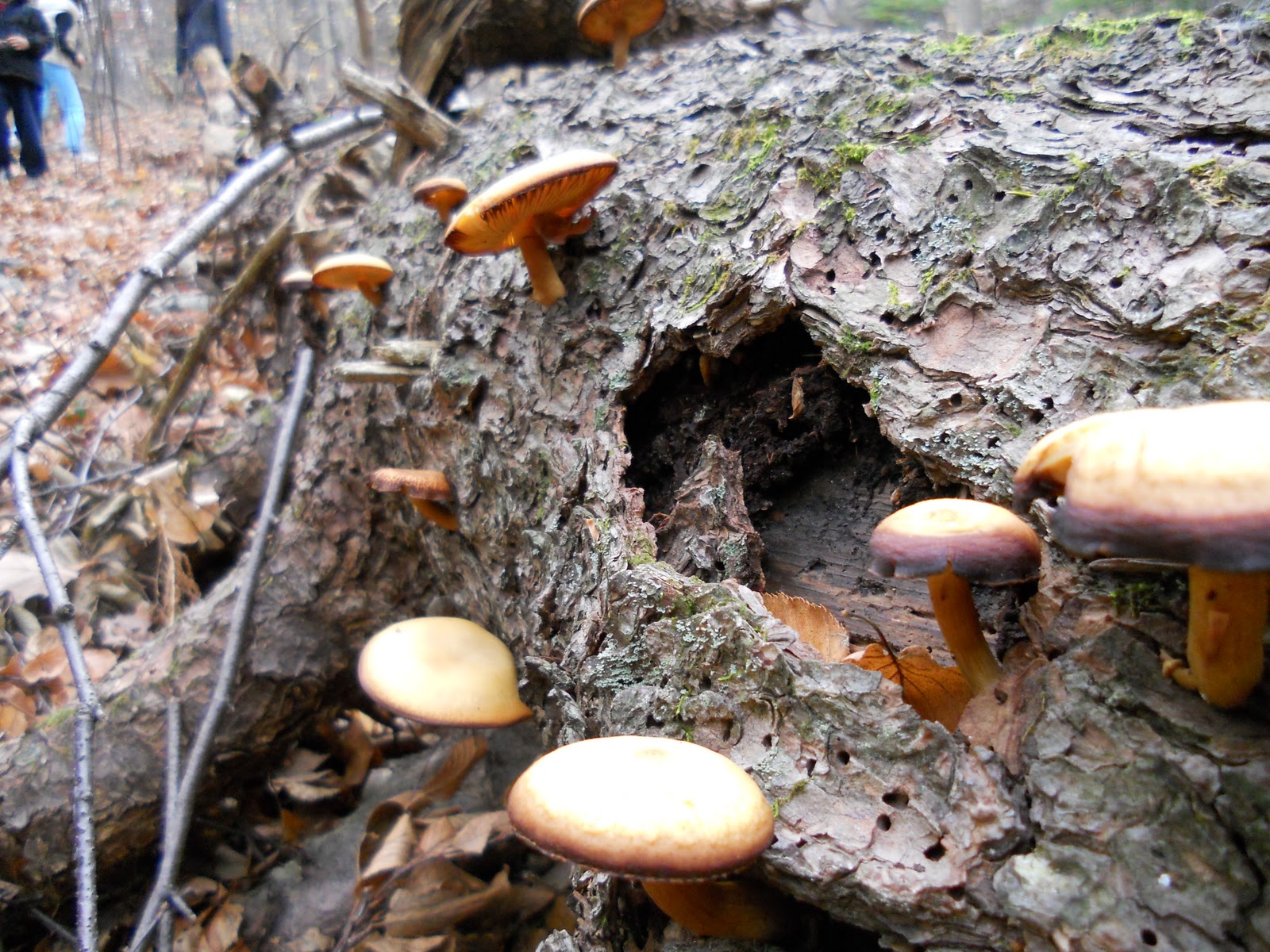
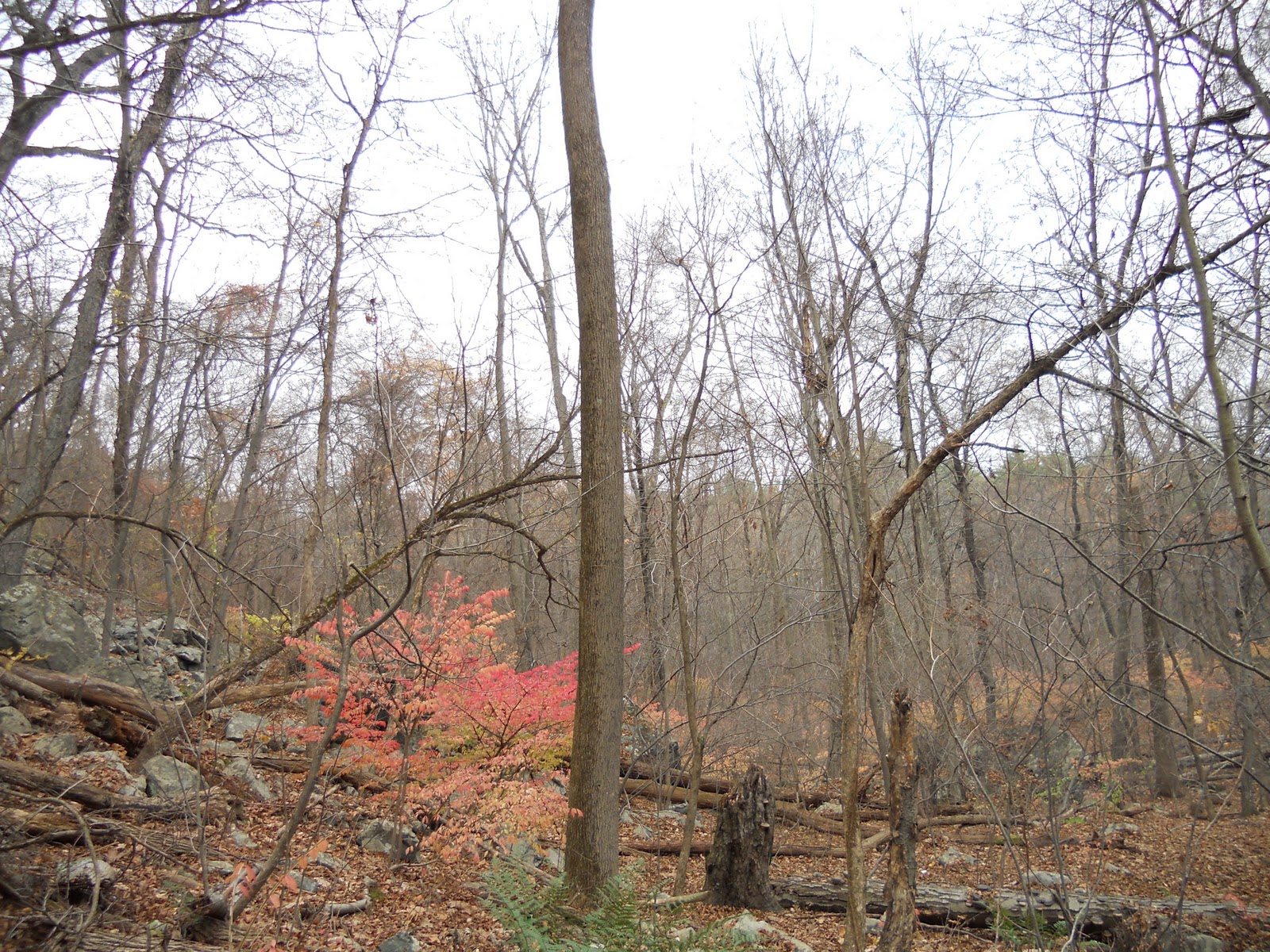
Autumnal (late)
I took the family up to Prospect Hill in Waltham, Mass., for a late autumn walk. It wasn't as pretty as the walk I took with my son last October on the banks of the Charles. Still, among the dead leaves and brown bark were flashes of color and beauty as the forest prepares for winter.






Friday, November 12, 2010
Kam Man in Quincy: A new model for old strip malls?
Most of my videos on innovation have focused on MIT technologies and research, but this week I thought I would highlight an example of successful innovation involving real estate and community. On the outside, the Kam Man (金門超市, or "Golden Gate Supermarket" in Chinese), located on Quincy Avenue in Quincy, Massachusetts, may not look that special -- an Asian supermarket located in an old strip mall. But there are a few things that make its business model unusual and ultimately successful. They are:
While the harsh flourescent lighting and scuffed linoleum of the old Bradlee's may not seem inviting, the model is clearly working: The parking lot of President's Plaza was filled to capacity, and most of the cube space was occupied. We saw many other customers doing the same thing as our family -- start with lunch at one of the small restaurants in the plaza, move on to shopping at the giant supermarket, and then browse the other businesses in the marketplace. There is turnover among the cube businesses, but some (such as the Lollicup shake tea) have been around for a few years, and the basic subletting model with Kam Man Food as the anchor has lasted since being established in Quincy in 2003.
- Identifying a niche and a need: The large but underserved Chinese and Vietnamese population south of Boston. As of last year, an estimated 22% of residents were Asian, Prior to 2000, many Chinese and Vietnamese living in the suburbs had to do their shopping in Boston's Chinatown (see my earlier report on the rise and fall of Super88)
- Leveraging existing networks and knowledge: Established in the 1970s in New York City, the Kam Man supermarket business was already going strong in the tri-state area (New York, New Jersey and Connecticut). Extending the model and distribution network to eastern Massachusetts was a feasible option for the company.
- Innovating on a huge and otherwise unusable retail space (a former Bradless in an aging strip mall not far from Quincy Center). A 40,000-square-foot chunk was devoted to the supermarket. The remainder was partitioned off cubicle-style (the walls don't reach to the ceiling) and sublet to other businesses serving Asian consumers.

While the harsh flourescent lighting and scuffed linoleum of the old Bradlee's may not seem inviting, the model is clearly working: The parking lot of President's Plaza was filled to capacity, and most of the cube space was occupied. We saw many other customers doing the same thing as our family -- start with lunch at one of the small restaurants in the plaza, move on to shopping at the giant supermarket, and then browse the other businesses in the marketplace. There is turnover among the cube businesses, but some (such as the Lollicup shake tea) have been around for a few years, and the basic subletting model with Kam Man Food as the anchor has lasted since being established in Quincy in 2003.
Walmart destroys local strip malls
Is it a model for the thousands of other Wal-marted strip malls scattered across the country? Unfortunately, the answer is probably "no". Most cities are already served by supermarkets, which makes it much harder to get the anchor tenant up and running. That leaves underserved ethnic communities of a sufficient population and lack of nearby alternatives. Having a relatively close distribution network is also key -- New York City is just a four-hour drive from Quincy, meaning some of Kam Man's trucks and suppliers could be extended into Massachusetts.Friday, November 05, 2010
CityCar prototype and interview
Below is another clip and interview from a project taking shape at the MIT Media Lab/Smart Cities unit, with GM collaboration: CityCar. From the project website:
Other MIT encounters:
The CityCar electric automobile, developed and prototyped by Smart Cities, is designed to meet the demand for enclosed personal mobility – with weather protection, climate control and comfort, secure storage, and crash protection – in the cleanest and most economical way possible. It weighs less than a thousand pounds, parks in much less space than a Smart Car, and is expected to get the equivalent of 150 to 200 miles per gallon of gasoline. Since it is battery-electric, it produces no tailpipe emissions.The prototype that I saw was half-scale and couldn't hold a person, but was nevertheless impressive to see as it compacted itself and rolled around on a small platform. The interview is with one of the grad students working on the project, who explains some of the features relating to charging, storage, and seating:
The architecture of the CityCar is radical. It does not have a central engine and traditional power train, but is powered by four in-wheel electric motors. Each wheel unit contains drive motor (which also enables regenerative braking), steering, and suspension, and is independently digitally controlled. This enables maneuvers like spinning on its own axis (an O-turn instead of a U-turn), moving sideways into parallel parking spaces, and lane changes while facing straight ahead.
Other MIT encounters:
Thursday, November 04, 2010
MIT Sloan Fellows program: Soft vs Hard
I received an email from a reader in Europe about my Sloan Fellows experience. One of his questions asked about the "soft" side of the program. He was under the impression that it's all about homework exercises and "hard" technology and quantitative topics, and it's not difficult to see why -- these topics are practically all I highlight when I write about my experiences at MIT (see links below).
While the Sloan Fellows curriculum during the summer indeed contains the quantitative core (Microeconomics, Accounting, DMD, Finance), the Fall semester is more "soft" topics -- leadership, strategy, managing innovation. Further, the program is not just about reading cases and completing exercises. There is a tremendous focus on the SF community as well as discovering your own strengths and weaknesses, and finding your career path. However, I am generally reluctant to discuss my own journey on the blog, as it's quite personal. Suffice it to say it is a central part of what we are doing and the coursework and exercises for these classes are very helpful in terms of letting us determine what we want to do after we finish. I am much clearer on this point now than I was in the summer -- but more self-discovery remains to be done!
Additionally, some of my classmates are also concentrating their electives in leadership and management coursework. It's where they see additional value in the Sloan Fellows program. My own preference tends more toward the technical and business experiences that I might otherwise never have a chance to learn about and may help me in my own career post-graduation. For this reason, I am taking two "action learning" classes -- G-Lab (a group consulting project overseas) and Linked Data Ventures, a class that studies the Semantic Web and involves designing an actual software product and business plan. It may not be soft, but it really is a rich learning experience. It's hard, but I love it.
Other MIT encounters:
While the Sloan Fellows curriculum during the summer indeed contains the quantitative core (Microeconomics, Accounting, DMD, Finance), the Fall semester is more "soft" topics -- leadership, strategy, managing innovation. Further, the program is not just about reading cases and completing exercises. There is a tremendous focus on the SF community as well as discovering your own strengths and weaknesses, and finding your career path. However, I am generally reluctant to discuss my own journey on the blog, as it's quite personal. Suffice it to say it is a central part of what we are doing and the coursework and exercises for these classes are very helpful in terms of letting us determine what we want to do after we finish. I am much clearer on this point now than I was in the summer -- but more self-discovery remains to be done!
Additionally, some of my classmates are also concentrating their electives in leadership and management coursework. It's where they see additional value in the Sloan Fellows program. My own preference tends more toward the technical and business experiences that I might otherwise never have a chance to learn about and may help me in my own career post-graduation. For this reason, I am taking two "action learning" classes -- G-Lab (a group consulting project overseas) and Linked Data Ventures, a class that studies the Semantic Web and involves designing an actual software product and business plan. It may not be soft, but it really is a rich learning experience. It's hard, but I love it.
Other MIT encounters:
Subscribe to:
Posts (Atom)